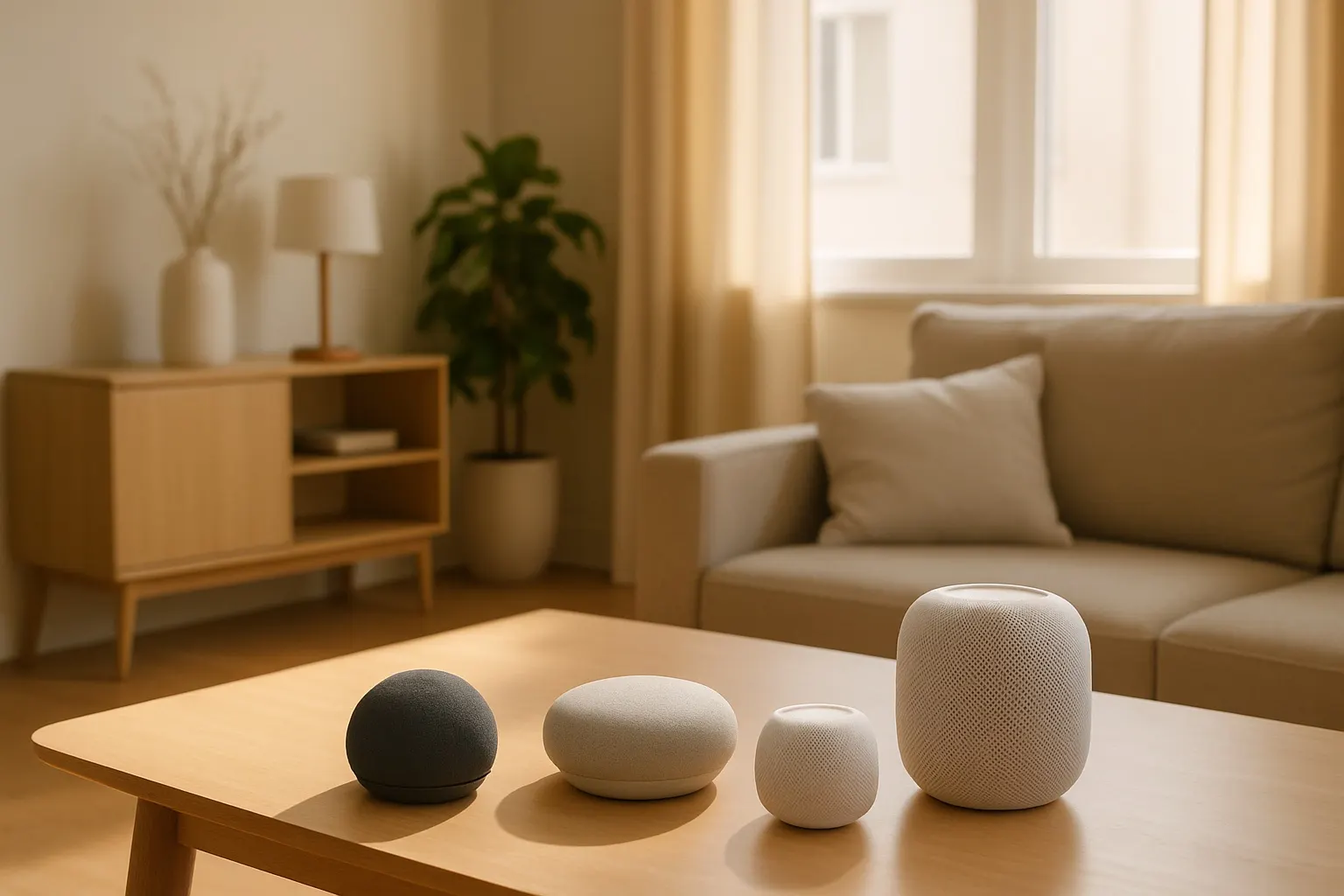
TL;DR: In 2026, the Amazon Echo is best for smart home control and device compatibility, Google Nest Audio wins on voice assistant intelligence, and the Apple HomePod mini delivers the best sound per dollar. Pick based on your existing ecosystem and top priority — no single speaker wins every category.
Choosing a smart speaker used to be simple: pick an ecosystem and go. But in 2026, the lines have blurred. Amazon's Echo lineup sounds better than ever. Google's Nest speakers have gotten eerily smart. And Apple's HomePod mini punches way above its price. So which one actually deserves a spot in your home?
We've tested all three ecosystems across kitchens, bedrooms, living rooms, and home offices. Here's what we found.
What Matters Most in a Smart Speaker
Before diving into models, think about what you actually need:
- Sound quality — Are you playing background music or hosting a listening session?
- Voice assistant smarts — Do you need complex routines, or just timers and weather?
- Ecosystem fit — What phone, TV, and other devices do you already own?
- Multi-room audio — Want synchronized music across your apartment?
- Privacy controls — How much do you care about mic-off buttons and data policies?
No single speaker wins every category. The best choice depends on which of these you prioritize.
Amazon Echo (5th Gen) — Best for Smart Home Control
Amazon's latest Echo remains the Swiss Army knife of smart speakers. Alexa supports more smart home devices than any other assistant. The fifth-gen Echo sounds noticeably better than its predecessors with improved mid-range clarity.
What it does well:- Widest smart home device compatibility (Zigbee and Matter built in)
- Excellent routine automation — chain actions with custom triggers
- Drop-in calling between Echo devices is seamless
- eero mesh networking built into Echo models
- Alexa still stumbles on complex or conversational queries
- The ad-supported experience can feel pushy unless you disable suggestions
If your home is packed with smart devices from different brands, Echo is the safest bet. According to Amazon, the Echo ecosystem now supports over 300,000 compatible devices as of 2026. We recommend the Amazon Echo (5th Gen) for its unmatched compatibility and solid audio.
Google Nest Audio — Best Voice Assistant
Google's Nest Audio doesn't get enough credit. The speaker itself sounds warm and full for its size, but the real star is Google Assistant. It handles natural language better than Alexa or Siri. Multi-step questions and follow-ups feel almost conversational.
What it does well:- Best at answering complex questions and understanding context
- Chromecast integration for seamless TV and audio casting
- Google Home app redesign makes routines actually intuitive
- Strong multi-room audio with speaker groups
- Fewer compatible smart home devices than Echo (though Matter is closing the gap)
- No built-in smart home hub radio (Zigbee/Thread) in the standard model
- Google's history of discontinuing products creates trust issues
For anyone deep in the Google ecosystem — Android phone, Chromecast, Gmail — the Nest Audio feels like a natural extension. Check out the Google Nest Audio if voice assistant intelligence is your top priority.
Apple HomePod Mini — Best Sound Per Dollar
The HomePod mini continues to surprise. Apple hasn't updated the hardware recently, but they don't need to — the computational audio processing squeezes remarkable sound from a tiny package. If you're in the Apple ecosystem, it's almost a no-brainer.
What it does well:- Best-in-class sound for its size and price point
- Seamless AirPlay 2 from any Apple device
- Handoff feature lets you transfer audio from iPhone by tapping the speaker
- Strong privacy stance with on-device processing
- Siri remains the weakest voice assistant of the three
- Limited smart home support outside HomeKit and Matter
- No Bluetooth audio input for non-Apple devices
- Fewer third-party integrations
The HomePod mini makes the most sense if your household runs on iPhones and iPads. It's less versatile than Echo but more polished within its lane.
Head-to-Head: Key Specs Compared
Sound quality (best to good): HomePod mini, then Nest Audio, then Echo 5th Gen. All three sound good, but Apple's computational audio edges ahead. Voice assistant smarts: Google Assistant leads, followed by Alexa, then Siri. Google handles nuance better. Alexa has more skills. Siri is improving but still trails. Smart home control: Echo leads, then Nest, then HomePod. Alexa's device support is unmatched. As of 2026, Matter adoption is narrowing the gap, but Echo still has the broadest native compatibility. Privacy: HomePod leads, then Nest, then Echo. Apple processes more on-device. Google improved transparency. Amazon still collects the most data. Price: All three hover around the same range, with frequent sales pushing Echo and Nest below HomePod mini.Multi-Room Setup: Our Recommendation
For a multi-room smart home audio setup, don't feel locked into one brand. Matter support means you can mix ecosystems more easily than before. That said, keeping speakers within one family gives you the smoothest multi-room audio sync.
Our top pick for a whole-apartment setup is a pair of Amazon Echo speakers. The price-to-coverage ratio is hard to beat, and Alexa's multi-room routines are the most flexible. Pair them with a few smart plugs and you've got voice control over nearly everything in your space.
The Verdict
There's no single "best" smart speaker — only the best one for your situation:
- Pick Echo if you want the widest smart home compatibility and love automation.
- Pick Nest Audio if you value a smart assistant that actually understands you.
- Pick HomePod mini if you're all-in on Apple and want the best sound quality.
Whichever you choose, 2026 is a great time to buy. Prices are competitive, Matter support is maturing, and all three companies have pushed meaningful updates to their voice platforms. The smart speaker that used to just set timers now genuinely runs your home.
Frequently Asked Questions
Which smart speaker has the best sound quality in 2026?
The Apple HomePod mini delivers the best sound quality relative to its size and price, thanks to Apple's computational audio processing. For larger rooms, the full-size HomePod or Sonos Era speakers may be better choices.
Can you mix different smart speaker brands in one home?
Yes. With Matter support maturing in 2026, mixing ecosystems is easier than ever. However, multi-room audio sync works best when all speakers are from the same brand. Cross-brand device control is the part that Matter handles well.
Is Alexa or Google Assistant better for smart home control?
Alexa supports more smart home devices overall and offers more granular routine automation. Google Assistant is better at understanding natural language and answering complex questions. For pure device control, Alexa has the edge. For a smarter conversational assistant, Google wins.
Do smart speakers listen to you all the time?
Smart speakers listen for their wake word ("Alexa," "Hey Google," "Hey Siri") but do not continuously record. All three brands offer physical mic-off buttons. Apple processes the most data on-device, while Amazon and Google send some voice data to the cloud for processing.
What is the cheapest way to set up multi-room smart speakers?
The Amazon Echo Dot and Google Nest Mini are the most affordable options at around $25-35 each during sales. Buy three or four, group them in the app, and you have synchronized whole-home audio for under $150.
Are smart speakers worth it if I only use my phone?
Yes. Voice control is faster for quick tasks like setting timers, checking weather, and controlling lights. Smart speakers also enable hands-free operation when cooking or exercising. They become genuinely useful once paired with even a few smart plugs or bulbs.