TL;DR: The Kasa Smart Plug Mini (EP25) is the best overall smart plug in 2026 — it supports Matter, includes energy monitoring, and costs under $15. For energy tracking, go with Emporia. For pure Alexa integration, the Amazon Smart Plug is the simplest option.
If you could upgrade only one thing in your home to make it feel smarter, a smart plug would be the move. They're cheap, dead simple to set up, and they instantly turn "dumb" appliances into voice-controlled, app-scheduled, automatable devices. Lamps, fans, coffee makers, space heaters — plug it in, connect to Wi-Fi, and suddenly you're living in the future.
We've tested dozens of smart plugs over the past year. Here's what actually matters when you're choosing one, plus our top recommendations for 2026.
What to Look for in a Smart Plug
Wi-Fi vs. Zigbee vs. Matter. Most people should stick with Wi-Fi plugs — they connect directly to your router with no hub required. Zigbee plugs need a hub like SmartThings or Hubitat but are more reliable on crowded networks. Matter-compatible plugs are the new standard. They work across ecosystems, which is a big deal if you mix Apple, Google, and Amazon devices. Energy monitoring. Some plugs track how much power a device draws in real time. This is surprisingly useful. You can figure out which appliances are energy hogs, set alerts, or automate things based on wattage — like turning off a charger once your laptop hits full. Size and form factor. A bulky plug that blocks the second outlet is a dealbreaker. Look for compact designs or plugs with a side-mounted form factor so both outlets stay usable. Voice assistant support. Nearly all smart plugs work with Alexa and Google Assistant. Apple HomeKit support is less common but growing, especially with Matter adoption. As of 2026, Matter-certified plugs work natively across all three ecosystems.Our Top Picks
Best Overall: Kasa Smart Plug Mini (EP25)
TP-Link's Kasa line has been a staple for years, and the EP25 is the current sweet spot. It supports Matter, has energy monitoring built in, and the app is genuinely good — clean interface, reliable schedules, and easy group controls. Setup takes about two minutes.
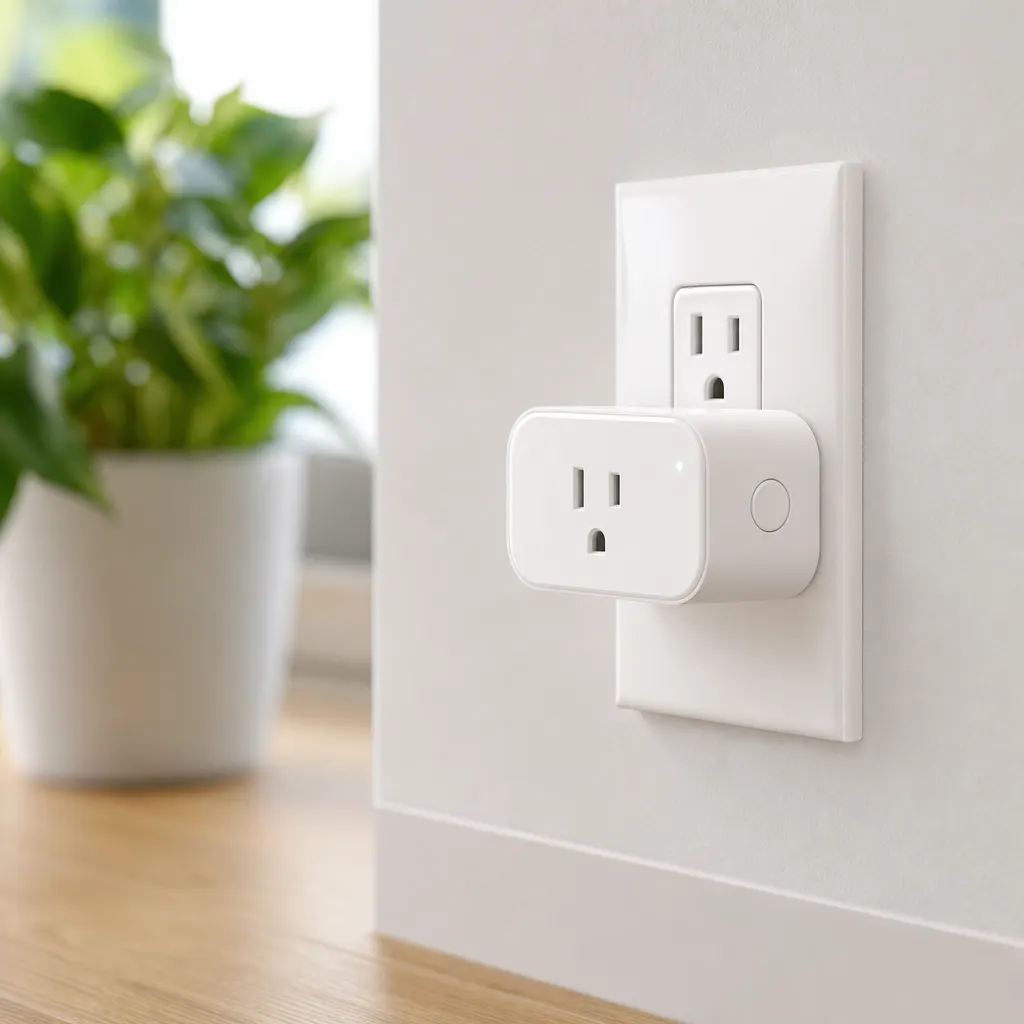
The compact design means you can stack two on a standard duplex outlet without them fighting for space. At under $15 per plug, the value is hard to beat.
We recommend the Kasa Smart Plug Mini EP25 for anyone starting out — it checks every box without overcomplicating things.
Best for Energy Monitoring: Emporia Smart Plug
If you want granular energy data, Emporia delivers. Their plug tracks real-time wattage, daily kWh, and estimated cost. The app lets you set budgets and see trends over time. According to Emporia's data, the average household discovers $10-20/month in wasted energy after installing monitoring plugs.
It works with Alexa and Google Assistant, and the build quality is solid. The only downside is the app can feel a bit cluttered if you don't care about the energy side of things.
Check out the Emporia Smart Plug with Energy Monitoring — it's perfect for anyone who wants to understand where their electricity actually goes.
Best for Alexa Households: Amazon Smart Plug
Sometimes the simplest answer is the right one. If your home runs on Alexa, the Amazon Smart Plug is as seamless as it gets. Setup happens entirely through the Alexa app. Routines work flawlessly. Voice control is instant — no cloud lag, no dropped connections.
It doesn't have energy monitoring or Matter support, which keeps it from being our overall pick. But for pure Alexa integration, nothing is smoother. They also go on sale constantly during Prime Day and holiday events.
Our top pick for Alexa users is the Amazon Smart Plug — reliable, affordable, and it just works within the Echo ecosystem.
Smart Plug Ideas You Might Not Have Thought Of
Most people start with lamps. That's fine, but here are some less obvious uses that make smart plugs really earn their keep:
- Coffee maker. Load it up the night before, schedule the plug to turn on at 6:45 AM. Wake up to fresh coffee.
- Window fan. Automate it based on temperature using a sensor or a routine. Cool air when you need it, off when you don't.
- Holiday lights. Schedule them to turn on at sunset and off at midnight. No more crawling behind the tree.
- Space heater. Set an auto-off timer so you never accidentally leave it running. Check your heater's wattage — most smart plugs handle up to 15A / 1800W.
- Phone charger. Use energy monitoring to cut power once charging completes. Better for your battery, better for your bill.
A Note on Safety
Smart plugs are rated for specific wattages. Don't plug high-draw appliances like full-size heaters, air conditioners, or ovens into a standard smart plug — that's a fire risk. Stick to the rated load, typically 10-15 amps. When in doubt, check the spec sheet.
Also, keep your firmware updated. Smart plugs are IoT devices on your network. Manufacturers push security patches, and ignoring them leaves a door open. According to the National Institute of Standards and Technology (NIST), IoT firmware updates are a critical part of home network security.
The Bottom Line
Smart plugs are the lowest-effort, highest-reward upgrade in home automation. For under $30, you can automate two or three devices, cut energy waste, and finally stop getting out of bed to turn off the living room lamp.
Start with a couple of Kasa EP25 plugs, automate the things that annoy you most, and go from there. Once you've tasted the convenience, you'll wonder how you ever lived without them.
Frequently Asked Questions
Do smart plugs use a lot of electricity themselves?
No. Most smart plugs draw less than 1 watt on standby — roughly $1-2 per year per plug. The energy savings from scheduling and automation typically offset this many times over.
Can I use a smart plug with a power strip?
Yes, you can plug a power strip into a smart plug to control multiple devices at once. Just make sure the combined wattage of all connected devices stays under the smart plug's rated capacity (usually 1800W / 15A).
Do smart plugs work without Wi-Fi?
Most Wi-Fi smart plugs require an active internet connection for app control and voice commands. Some models retain scheduled automations locally during outages. Zigbee and Z-Wave plugs work through a local hub and don't depend on internet for basic operation.
Are Matter smart plugs better than regular Wi-Fi plugs?
Matter plugs work across all major ecosystems (Alexa, Google Home, HomeKit) without needing separate integrations. As of 2026, Matter is the recommended standard for new purchases. The practical benefit is flexibility — you can switch ecosystems without replacing hardware.
How many smart plugs can my Wi-Fi handle?
A typical home router can handle 20-30 smart plugs without issues. If you're running more than that, or if your network feels sluggish, consider a mesh router system or switching some devices to Zigbee/Thread, which use a separate radio band and don't compete for Wi-Fi bandwidth.
Can smart plugs be used outdoors?
Only if they're rated for outdoor use. Standard indoor smart plugs are not weatherproof. Look for IP44-rated or higher outdoor smart plugs if you want to automate patio lights, fountain pumps, or holiday decorations outside.