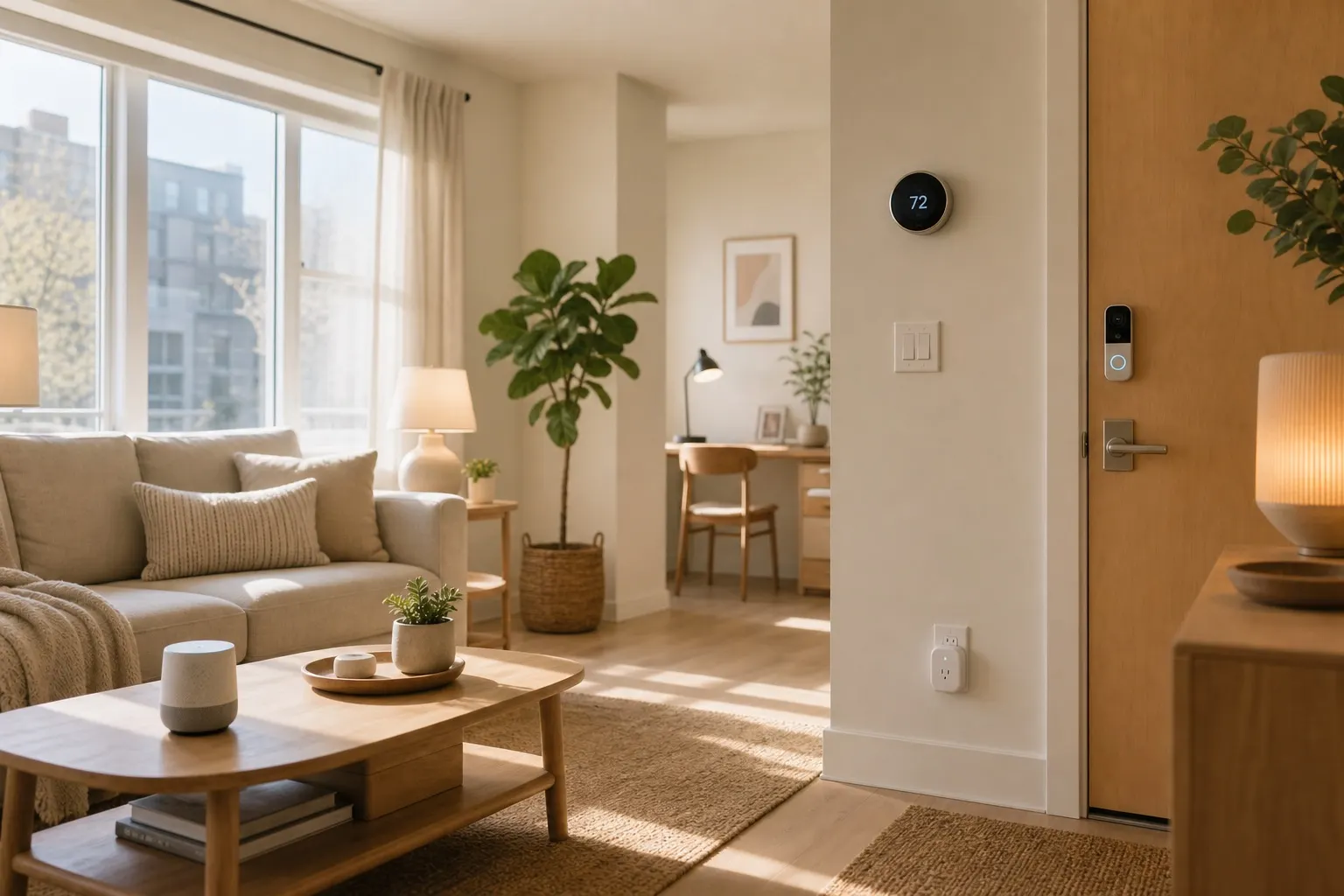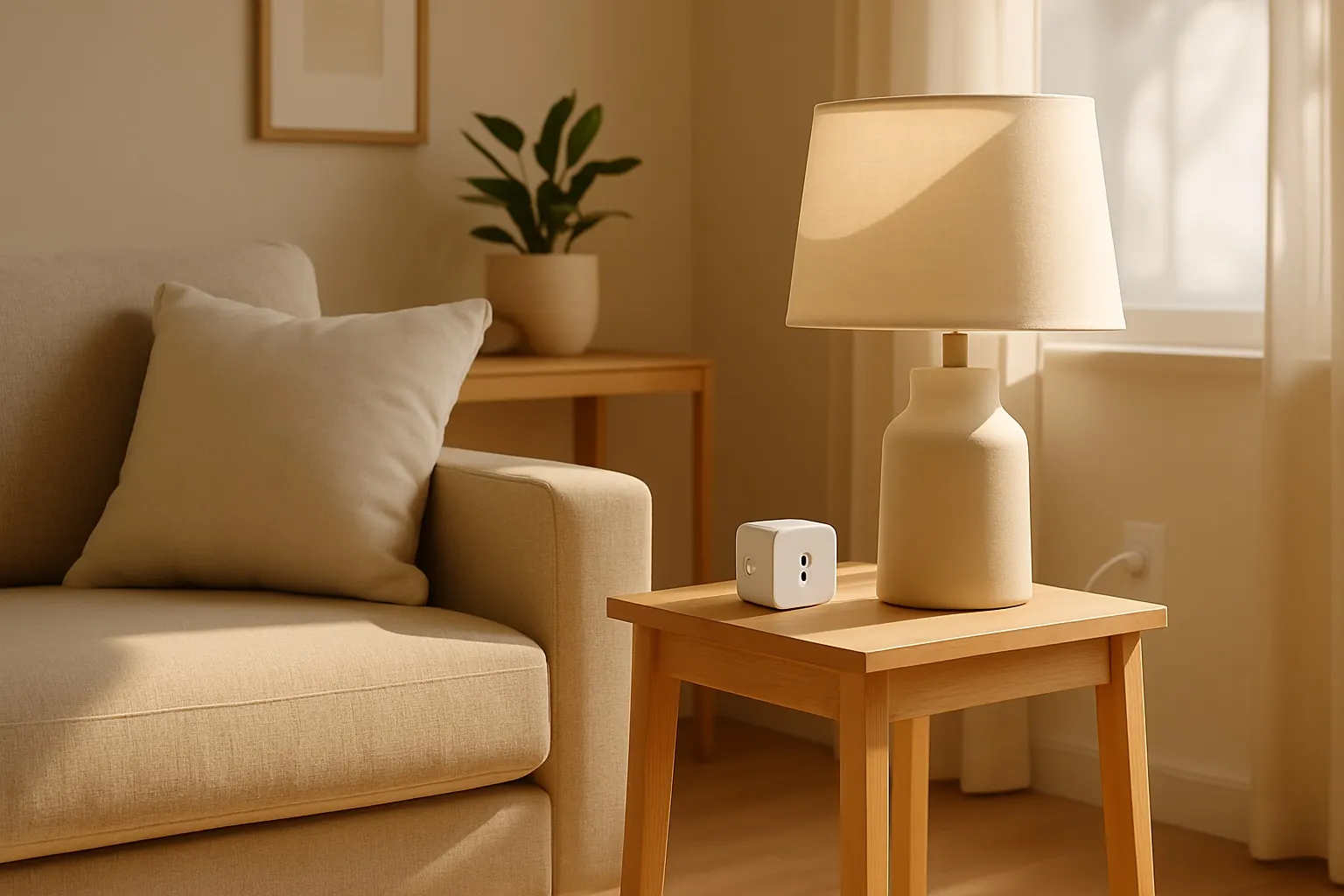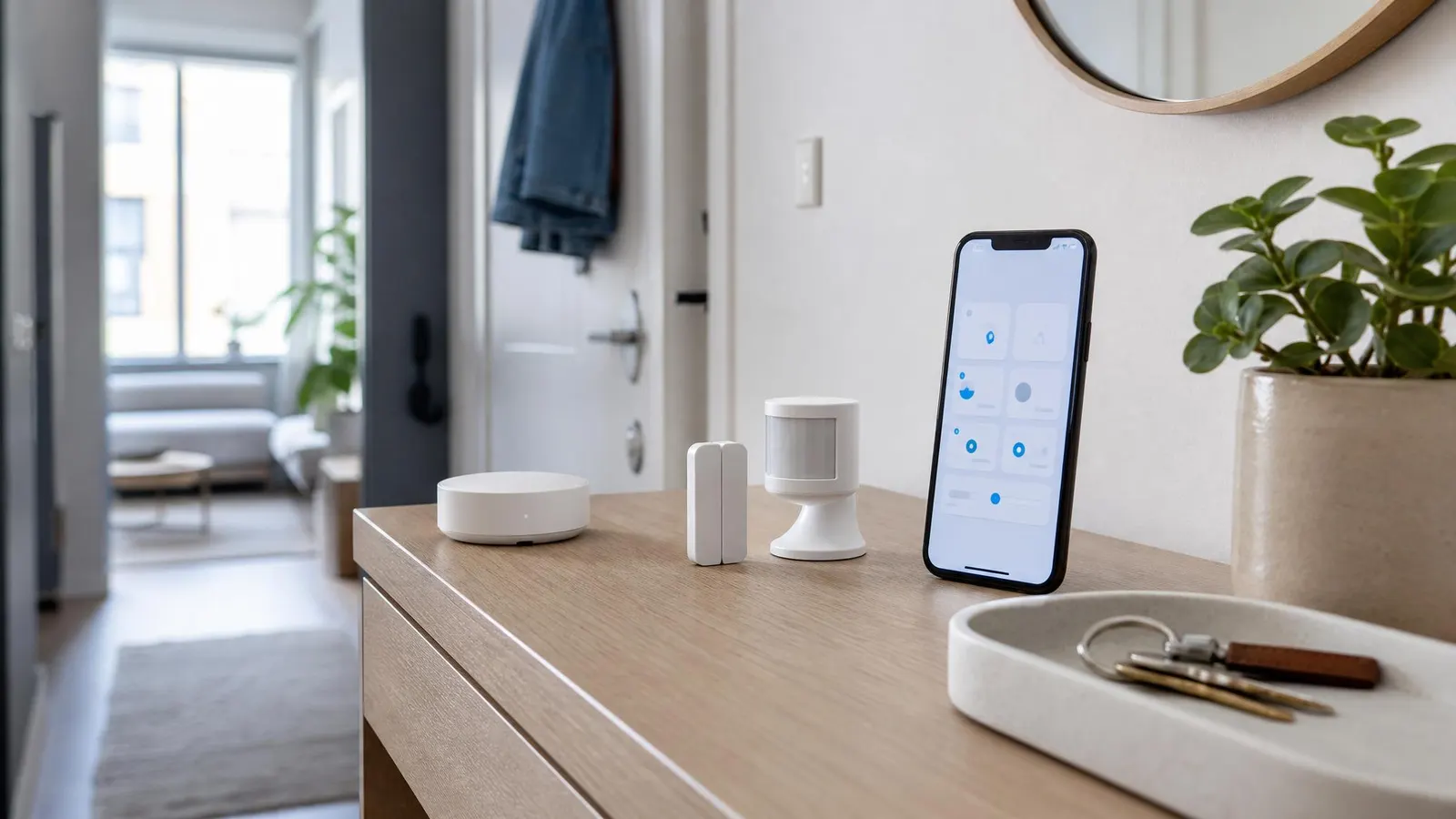
You do not need cameras in every corner to make an apartment smarter. A small smart apartment sensor kit can catch the problems renters actually worry about: a sink leak, a door left open, a too-hot room, or a package closet someone forgot to close.
This post contains affiliate links. We may earn a small commission at no extra cost to you. Quick answer: Start with two leak sensors, two contact sensors, one motion sensor, and one temperature/humidity sensor. Add a hub only if your devices require it. Place sensors where they prevent expensive damage first, then use automations for comfort and convenience. Everything below is removable, renter-friendly, and easy to pack when you move.Why Sensors Beat Flashy Gadgets
Smart lighting and speakers are fun, but sensors are the quiet layer that makes a small home feel capable. They watch for changes, then trigger useful actions without you opening an app.
For renters, the best sensor kit is less about showing off and more about avoiding bad surprises. A water sensor under the kitchen sink can alert you before a slow drip becomes cabinet damage. A contact sensor on a balcony door can remind you if it is open while the heat or air conditioning is running. A temperature sensor can show whether one room gets too cold for pets or too warm for sleep.
The big rule: buy sensors for real risks in your apartment, not for imaginary automation demos. If your building has older plumbing, prioritize leak detection. If you get deliveries inside a shared entry, prioritize door and motion alerts. If your apartment runs hot, start with temperature and humidity.
The Starter Kit That Covers Most Rentals
For a typical one-bedroom apartment, this is the practical baseline:
- 2 water leak sensors
- 2 contact sensors for doors, windows, or cabinets
- 1 motion sensor
- 1 temperature and humidity sensor
- 1 smart speaker or hub, if needed for alerts
The Aqara Water Leak Sensor is a popular pick if you are comfortable using an Aqara hub. For a simpler Wi-Fi option, the GoveeLife Wi-Fi Water Leak Detector is easier to set up and can send phone alerts without building a bigger system.
For doors and cabinets, compact contact sensors are the workhorses. The Aqara Door and Window Sensor is small enough to hide on a cabinet, closet, or balcony door. If you already use Alexa, an Echo Dot can handle voice announcements and simple routines.
Want a broader starting point before buying sensors? See our renter-friendly smart home upgrades guide for the devices that pair best with this setup.
Where to Place Each Sensor
Start with leak sensors because they prevent the most expensive problems. Put one under the kitchen sink, as close as possible to the supply lines or dishwasher connection. Put the second near the water heater, bathroom vanity, washing machine hookup, or any place you have seen moisture before.
Use contact sensors where the answer matters. A front door sensor can trigger a gentle "door opened" announcement when you are home. A balcony door sensor can remind you to close it at night. A cabinet sensor can watch a medicine cabinet, cleaning supply cabinet, or under-sink area where you want an extra alert.
Motion sensors are most useful in transition areas: entryway, hallway, laundry closet, or kitchen. Avoid pointing them at windows, vents, or busy pet paths if you do not want false triggers.
Temperature and humidity sensors belong where comfort or risk changes fastest. Bedrooms, bathrooms, and poorly ventilated corners are better choices than the middle of the living room. The EPA recommends controlling indoor moisture to reduce mold risk, especially in bathrooms and kitchens, so humidity data is worth watching in small apartments: EPA mold and moisture guidance.
Automations Worth Setting Up
Keep automations boring. Boring is reliable.
Create a leak alert that sends a phone notification and makes your smart speaker announce the problem. If you use a smart plug for a dehumidifier or small fan, you can turn it on when humidity rises above your chosen threshold.
Set a contact sensor routine for the front door after bedtime. You do not need a full security system to get value from a simple alert that says the door opened between midnight and 6 a.m.
Use a motion sensor for convenience only after your safety alerts are working. Entryway motion can turn on a lamp for three minutes, which is useful when your hands are full. Bathroom motion can trigger a fan through a smart plug if the layout allows it, though you should avoid modifying any hardwired fan switch unless your landlord approves.
Finally, create a low-battery reminder. Sensor kits fail quietly when batteries die. A monthly calendar reminder to check battery status is enough for most renters.
Buying Tips for Renters
Choose adhesive-mounted sensors with replaceable batteries. Keep the original adhesive pads, manuals, and tiny reset pins in a labeled bag so moving out is not annoying.
Before buying, decide whether you want Wi-Fi sensors or hub-based sensors. Wi-Fi is simpler for one or two devices, but too many Wi-Fi gadgets can clutter your router. Hub-based systems like Aqara, SmartThings, or Apple Home-compatible Thread devices are cleaner once you own several sensors.
Also check notification behavior before trusting a device. A leak sensor that only beeps locally is less useful if you are at work. Look for app alerts, voice announcements, and battery warnings.
FAQ
Do renters need permission to install smart sensors?
Usually no, as long as the sensors use removable adhesive and do not require drilling, rewiring, or permanent changes. Check your lease if you plan to place anything outside the apartment or in a shared hallway.
Are Wi-Fi sensors better than hub-based sensors?
Wi-Fi sensors are easier for small setups. Hub-based sensors are better when you want lower battery drain, faster automations, and more than a handful of devices. For a six-sensor apartment kit, either approach can work.
What should I buy first?
Buy leak sensors first, then contact sensors, then motion or temperature sensors. Preventing water damage is more valuable than turning on a lamp automatically, especially in a rental where repairs can become stressful fast.
The best smart apartment sensor kit is not complicated. It is a handful of small devices in the right places, with alerts you will actually notice. Build that first, then add the fun automations later.