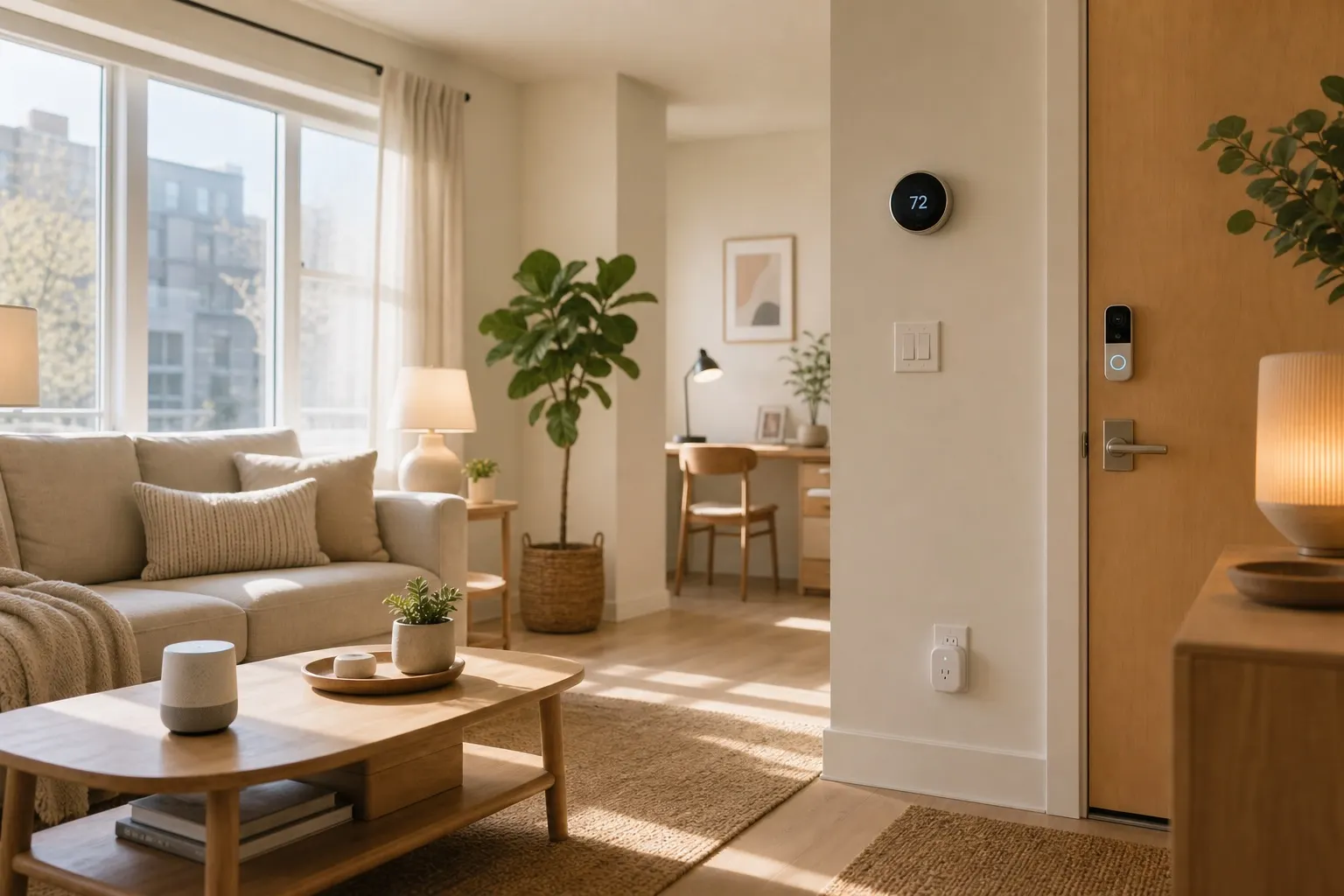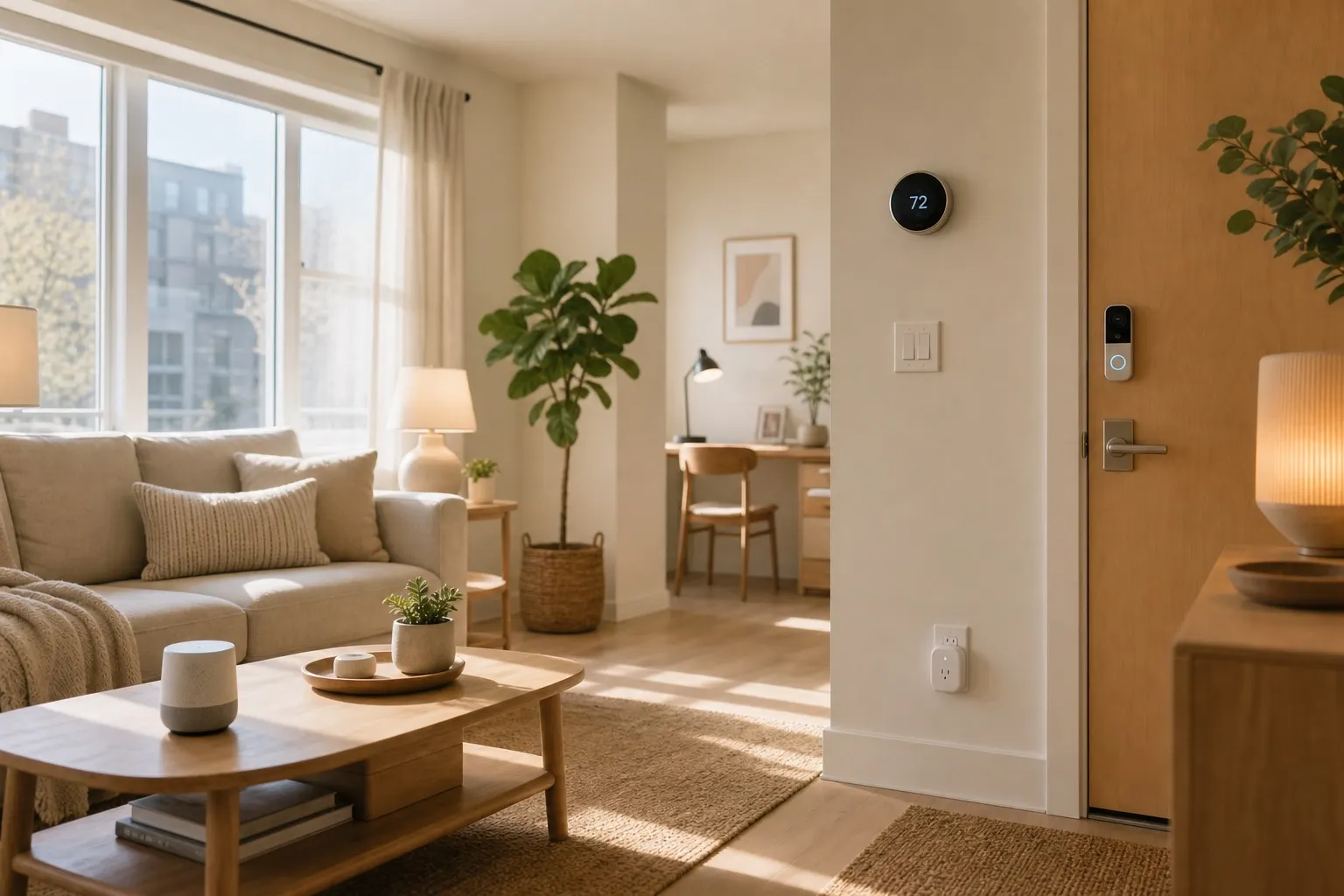
You can get most of the benefits of smart switches in a rental without touching a wire. The safest route is to leave the wall switch alone and add control somewhere else: smart bulbs, plug-in lamp modules, wireless remotes, or switch button pushers that press the existing switch for you.
This post contains affiliate links. We may earn a small commission at no extra cost to you. TL;DR: The best renter-friendly smart switches are usually not hardwired switches. Start with smart bulbs for ceiling fixtures, smart plugs for lamps, and adhesive wireless buttons for convenient control. Use a switch-pusher only when you need to physically toggle an existing wall switch, and always keep the original setup easy to remove before move-out.Why Most Renters Should Avoid Hardwired Switches
A hardwired smart switch can be excellent in a house you own, but it creates problems in an apartment. You may need landlord approval, the electrical box may not have a neutral wire, and a bad installation can create a real safety issue. It also leaves you with a move-out chore: reinstalling the original switch exactly as you found it.
For most renters, the better question is not "Which smart switch should I wire in?" It is "How can I control this light without changing the wiring?" That opens up a much safer set of options.
The National Fire Protection Association's electrical safety guidance is a good reminder that electrical work is not the place to improvise. If you are not fully sure what is in the wall, skip the wall.
Option 1: Smart Bulbs Plus Wireless Buttons
For ceiling lights and exposed fixtures, smart bulbs are the cleanest renter-friendly smart switch replacement. You leave the existing wall switch turned on, then control the bulb from an app, voice assistant, schedule, or small wireless button.
A setup like Philips Hue smart bulbs with a Hue dimmer remote is polished, reliable, and easy to remove. For a lower-cost setup, look at Wi-Fi bulbs from Kasa, Wyze, or Govee. The main tradeoff is behavior: if someone flips the old wall switch off, the smart bulb loses power until the switch is turned back on.
That is where a wireless button helps. Stick a small remote near the old switch plate, on a nightstand, or under a desk. It gives the room a normal "switch" feel without opening the wall. This pairs nicely with a broader renter-friendly smart home setup where every device can move with you.
Option 2: Smart Plugs for Lamps and Accent Lighting
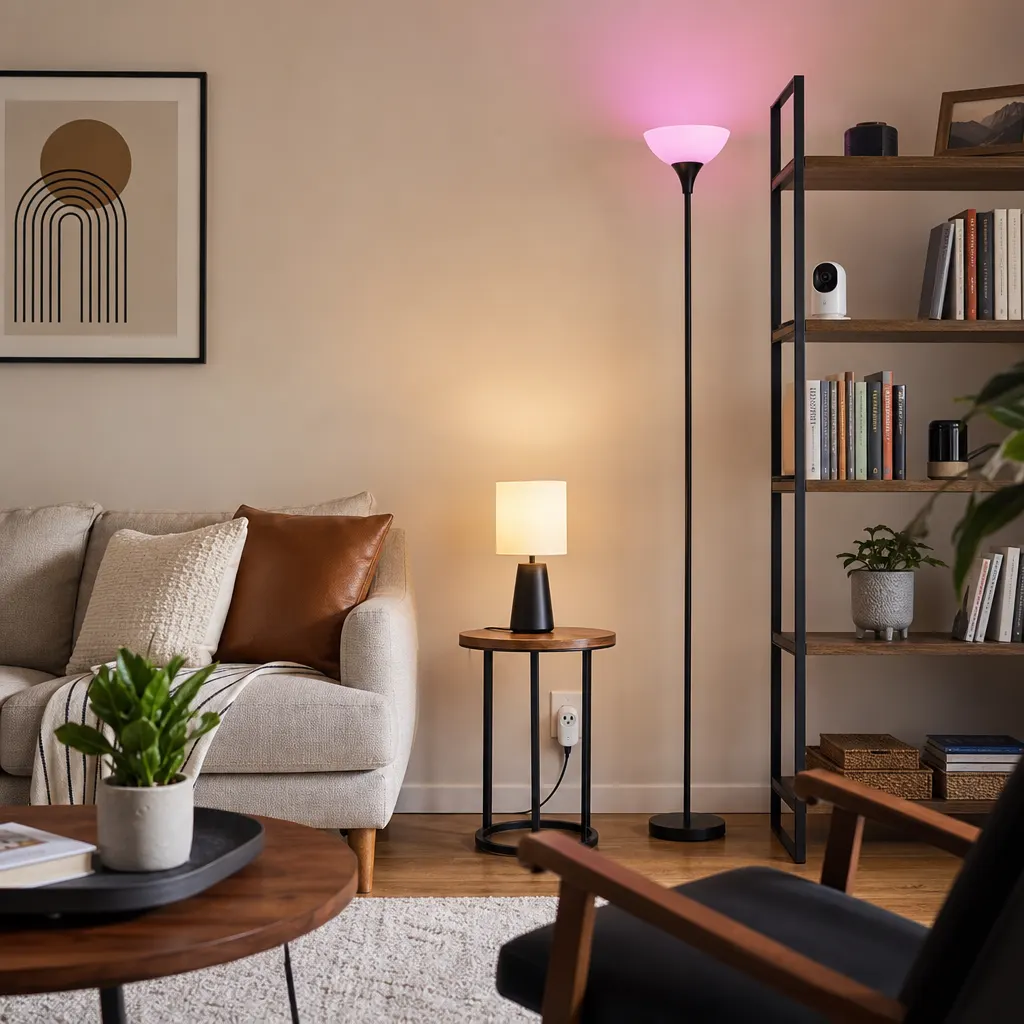
If the light plugs into an outlet, do not overcomplicate it. A smart plug is the easiest smart switch you can buy. Plug the module into the wall, plug the lamp into the module, and control it by phone, schedule, voice, or automation.
The Kasa Smart Plug Mini is a dependable pick for lamps, fans, and holiday lights. For a studio or small bedroom, two smart plugs can handle bedside lamps, a desk lamp, or a floor lamp without changing a single fixture.
Smart plugs are also great for routines. A "workday start" scene can turn on a desk lamp at 8:30 a.m. A "movie night" scene can dim the main lamp and turn on LED backlighting. It feels like a smart switch system, but the whole setup can go into a moving box in five minutes.
Option 3: Switch Pushers for Awkward Fixtures
Some apartments have lights that are only practical from the wall switch: bathroom fans, old ceiling fixtures, or hallway lights with no smart bulb option. In those cases, a switch-pusher can make sense. These small battery-powered devices attach over or beside the switch and physically press it when triggered.
The best-known option is the SwitchBot Bot. It is not as elegant as a true smart switch, but it solves a specific renter problem: control without rewiring. You may need a hub for remote access or voice assistant control, so check the bundle before buying.
Use switch pushers sparingly. They add visual clutter, batteries, and another app. For everyday lamps and bulbs, smart plugs and smart bulbs are usually cleaner. For that one stubborn wall switch, though, a button pusher can be the difference between "not possible" and "good enough."
What to buy first: Start with the light you use most often. For many apartments, that is a living room lamp or bedroom lamp, which means a smart plug is the first purchase. If your main pain point is an overhead light, buy one smart bulb and one wireless button before investing in a whole ecosystem.Here is a simple starter path:
- Add one smart plug to your most-used lamp.
- Add one smart bulb to the fixture you wish had dimming.
- Add a wireless button where you naturally reach for a switch.
- Consider a SwitchBot-style pusher only for a fixture that cannot be solved another way.
If you already use Alexa or Google Assistant, choose devices that work with your existing speaker. If you use Apple Home, check Matter or HomeKit support before buying. Compatibility matters more than chasing the cheapest gadget.
FAQ
Can renters install a hardwired smart switch?
Sometimes, but it depends on your lease, local rules, the wiring in the box, and landlord approval. Most renters are better off using smart bulbs, smart plugs, and wireless buttons because they are removable and lower risk.
What happens if someone turns off the wall switch?
Smart bulbs need constant power, so they stop responding when the wall switch is off. A small switch cover, a wireless button nearby, or a house rule to leave the switch on usually solves the problem.
Are switch pushers worth it?
They are worth it for awkward fixtures you cannot control another way. For lamps and standard bulbs, a smart plug or smart bulb is cleaner, cheaper, and easier to live with.
Renter-friendly smart switches are really about control, not wiring. Keep the apartment intact, choose devices you can remove in minutes, and build around the lights you use every day.