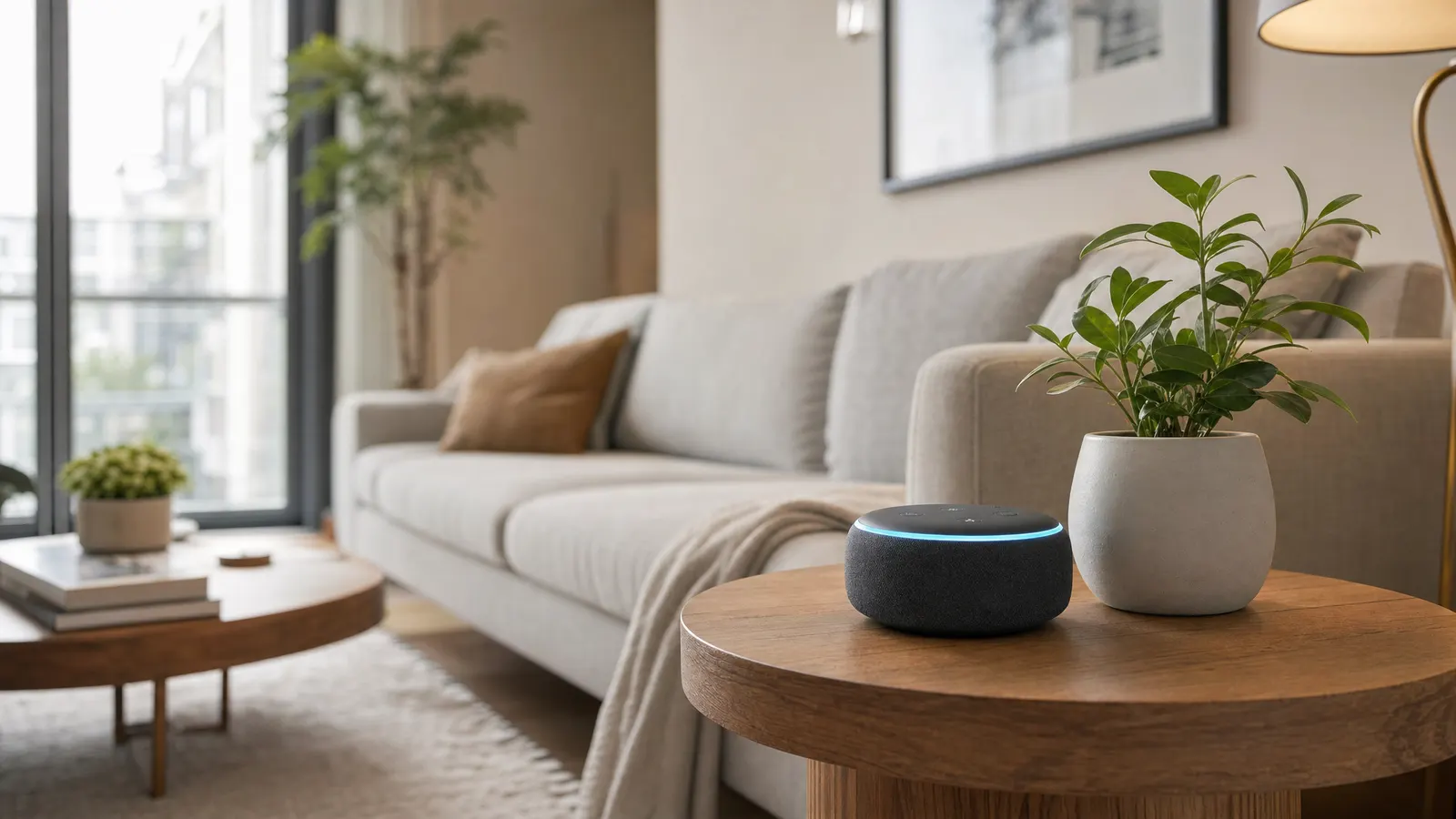
In a small apartment, every square inch of counter and shelf space is prime real estate. You want the convenience of a voice-controlled smart speaker, but you can't afford to sacrifice space to a bulky device. The good news is that you don't have to choose between size and sound quality.
This post contains affiliate links. We may earn a small commission at no extra cost to you. The quick answer is to choose a compact smart speaker with room-adapting audio technology. Models like the Amazon Echo Dot (5th Gen) or Google Nest Mini are specifically designed for smaller rooms, offering clear vocals and surprisingly decent bass for their size. They act as a perfect hub for your renter-friendly smart home.Choosing the right speaker enhances your daily routines, from playing music while you cook in a tiny kitchen to setting timers and controlling your studio apartment's smart lighting.
What to Look For in an Apartment-Friendly Smart Speaker
When you're tight on space, the priorities shift. A giant speaker with booming bass might sound great in a large house, but it's overkill and potentially inconsiderate to your neighbors in an apartment building.
- Compact Footprint: The most obvious factor. The speaker should fit comfortably on a nightstand, a small kitchen counter, or a bookshelf without looking out of place.
- Balanced Audio Profile: Look for speakers praised for clear vocals and balanced mids. Overpowering bass will sound muddy and can easily travel through walls.
- Smart Assistant Ecosystem: Are you already using Google Assistant for your calendar, or is your home set up with Amazon Alexa? Sticking to one ecosystem makes for a much smoother experience.
- Connectivity: Bluetooth is standard, but having a 3.5mm audio-out jack can be a bonus if you ever want to connect it to a larger, non-smart stereo system.
Top Picks for Small Apartments in 2026
These speakers hit the sweet spot between a compact design and impressive audio performance for their size.
1. Amazon Echo Dot (5th Gen with clock)
The classic choice for a reason. The latest Echo Dot packs a bigger driver than its predecessors, delivering clearer sound and better bass. It's the perfect size for a bedside table, and the "with clock" version is incredibly useful, showing the time, timers, or song titles.
The Echo Dot is a fantastic central hub for an Alexa-powered smart home. It's responsive, has thousands of skills, and offers great value for money.
2. Google Nest Mini
For those in the Google ecosystem, the Nest Mini is a powerful and discreet option. It can be placed flat on a surface or mounted on a wall, which is a fantastic space-saving feature for tiny apartments. Its audio is tuned for voice clarity, making it excellent for listening to podcasts, news briefings, and getting clear responses from Google Assistant.
While its bass isn't as pronounced as the Echo Dot's, the Google Nest Mini's integration with Google services is seamless and its voice recognition is top-notch.
3. Apple HomePod mini
If you're an Apple user, the HomePod mini is a must-consider. It uses computational audio to deliver a surprisingly rich, 360-degree sound experience from a tiny, spherical package. It sounds much bigger than it is. The integration with Apple Music, Siri, and HomeKit is flawless, making it the brain of an Apple-centric smart home.
The HomePod mini is more expensive than its competitors, but for those invested in Apple's ecosystem, the premium is often worth it for the audio quality and seamless experience. As CNET notes in their review, its sound quality stands out in the small speaker category.
Getting the Most Out of Your Speaker
- Placement is Key: Don't shove your speaker in a corner or a crowded bookshelf. Giving it a little breathing room will improve sound quality and microphone sensitivity.
- Create Routines: Use your smart speaker to automate your day. A "Good Morning" routine can turn on the lights, read you the news, and start your coffee maker (with a smart plug, of course!).
- Use it as an Intercom: If you get a second speaker, you can use them as an intercom system to communicate across different rooms—a surprisingly useful feature even in a smaller apartment.
---